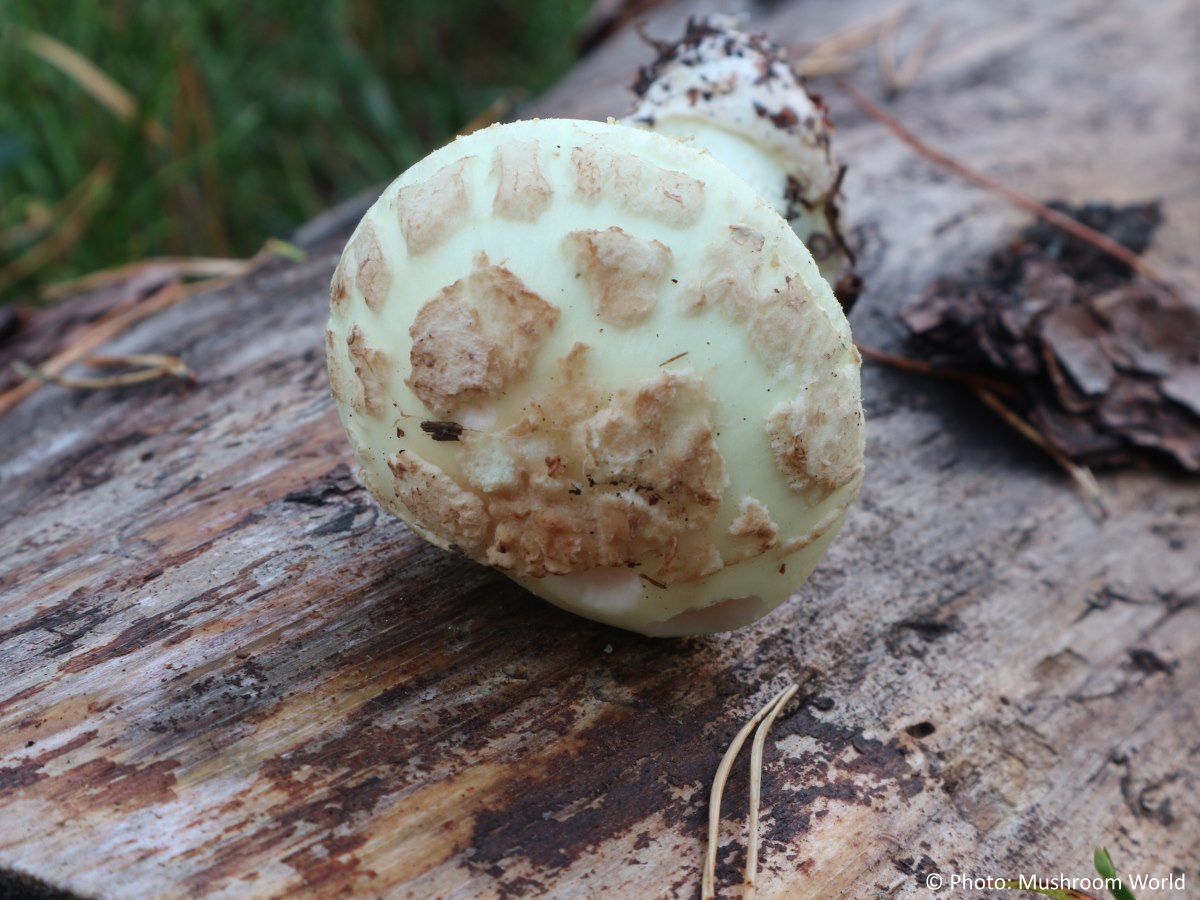
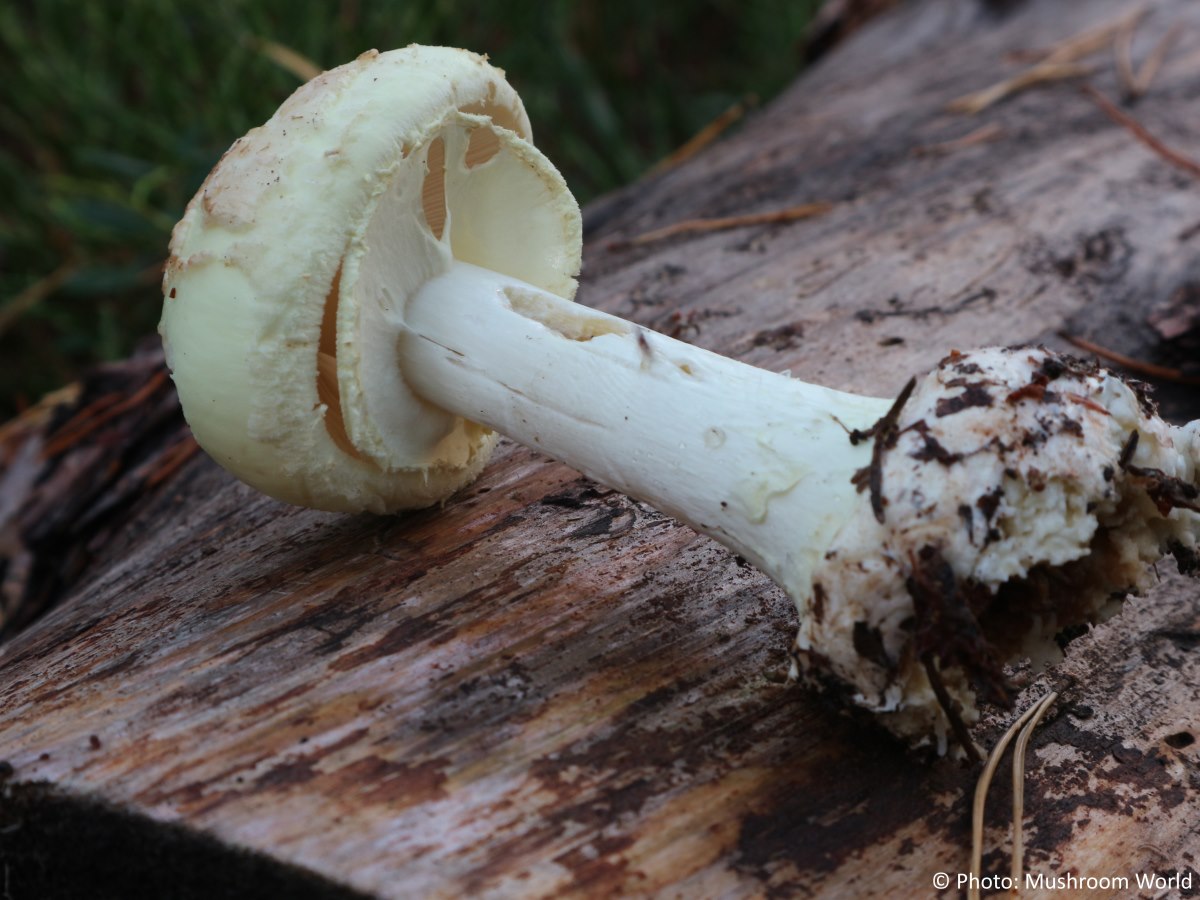
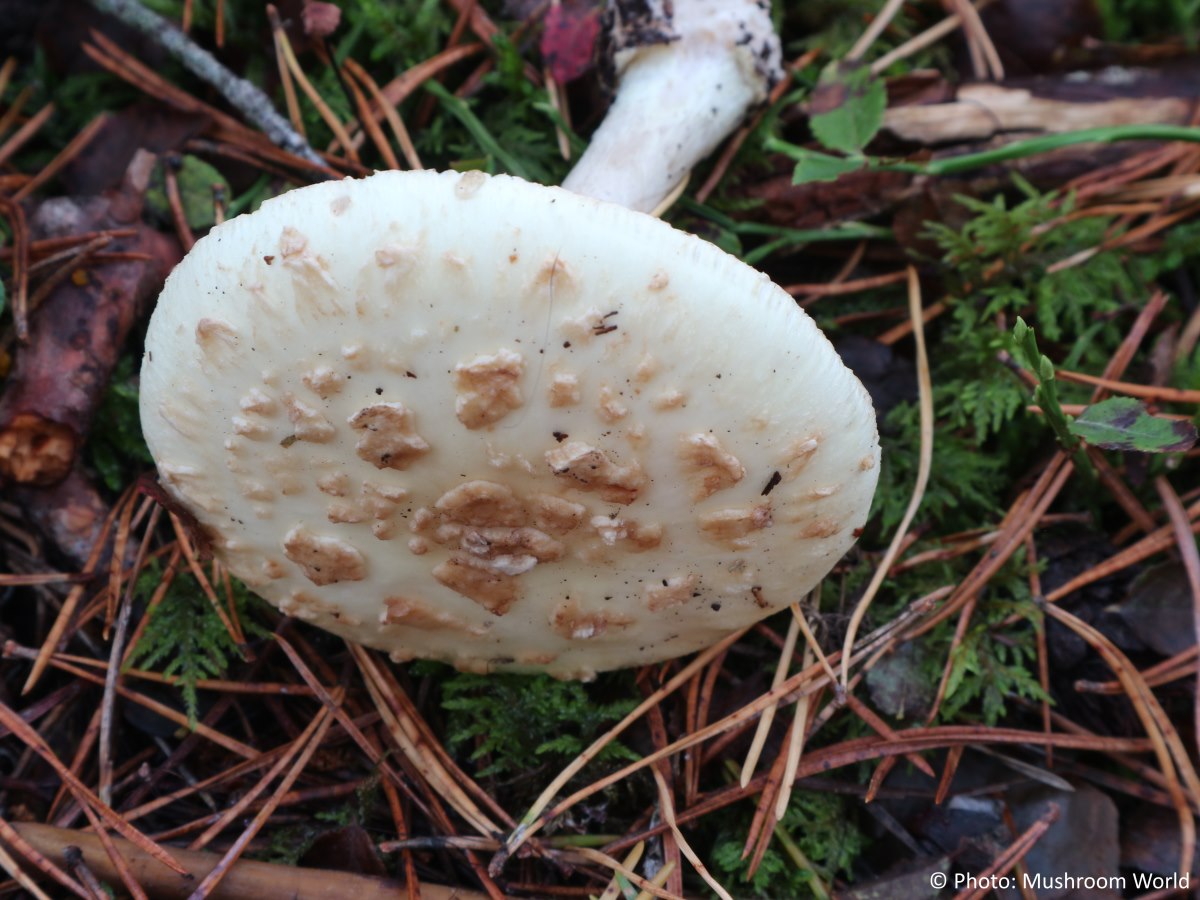
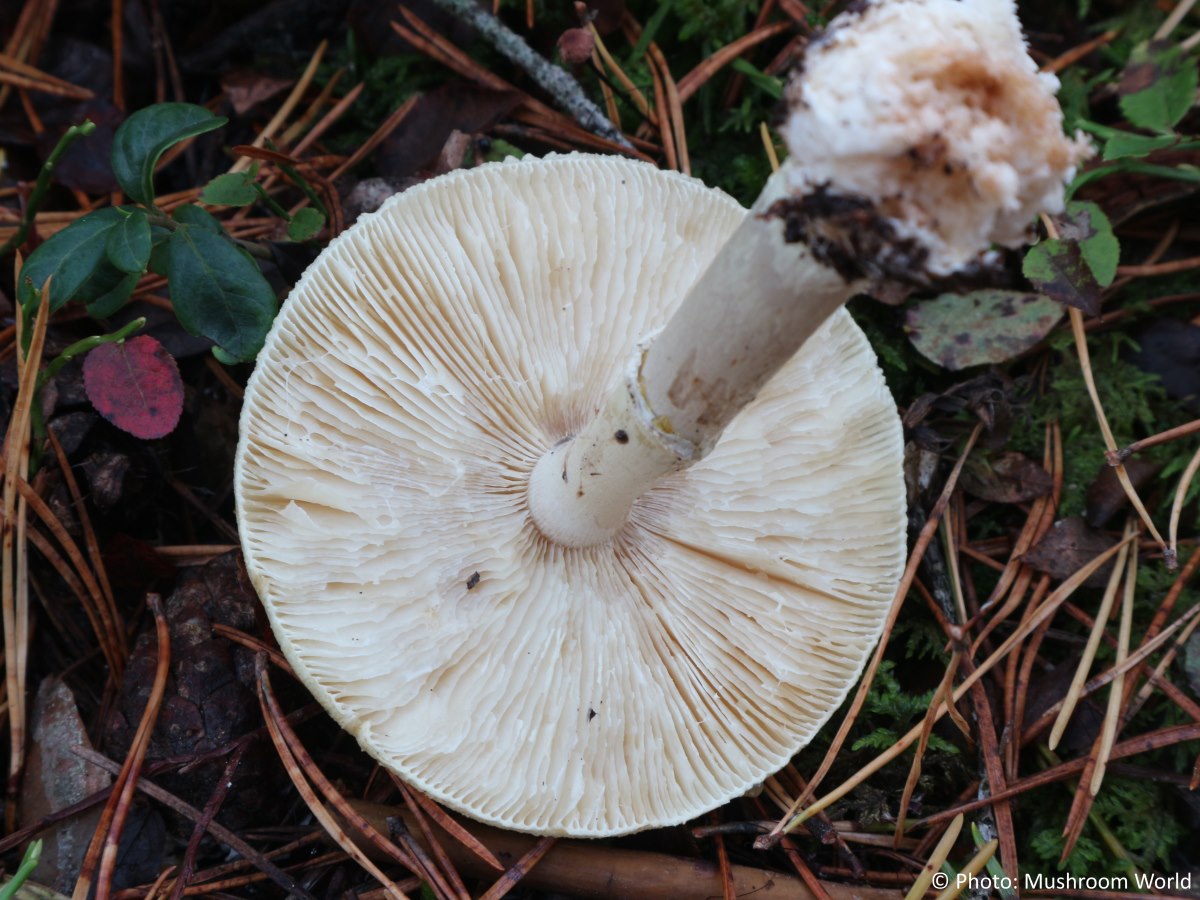
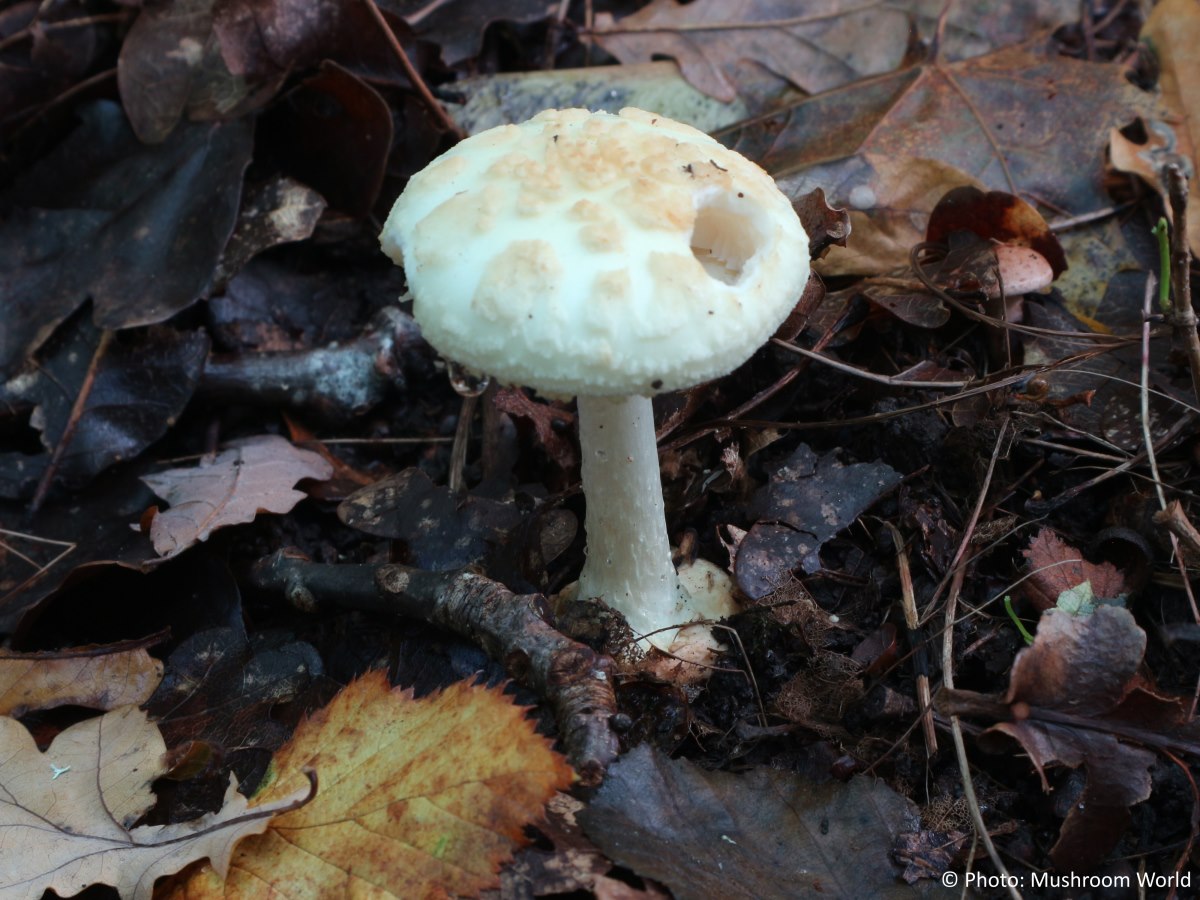
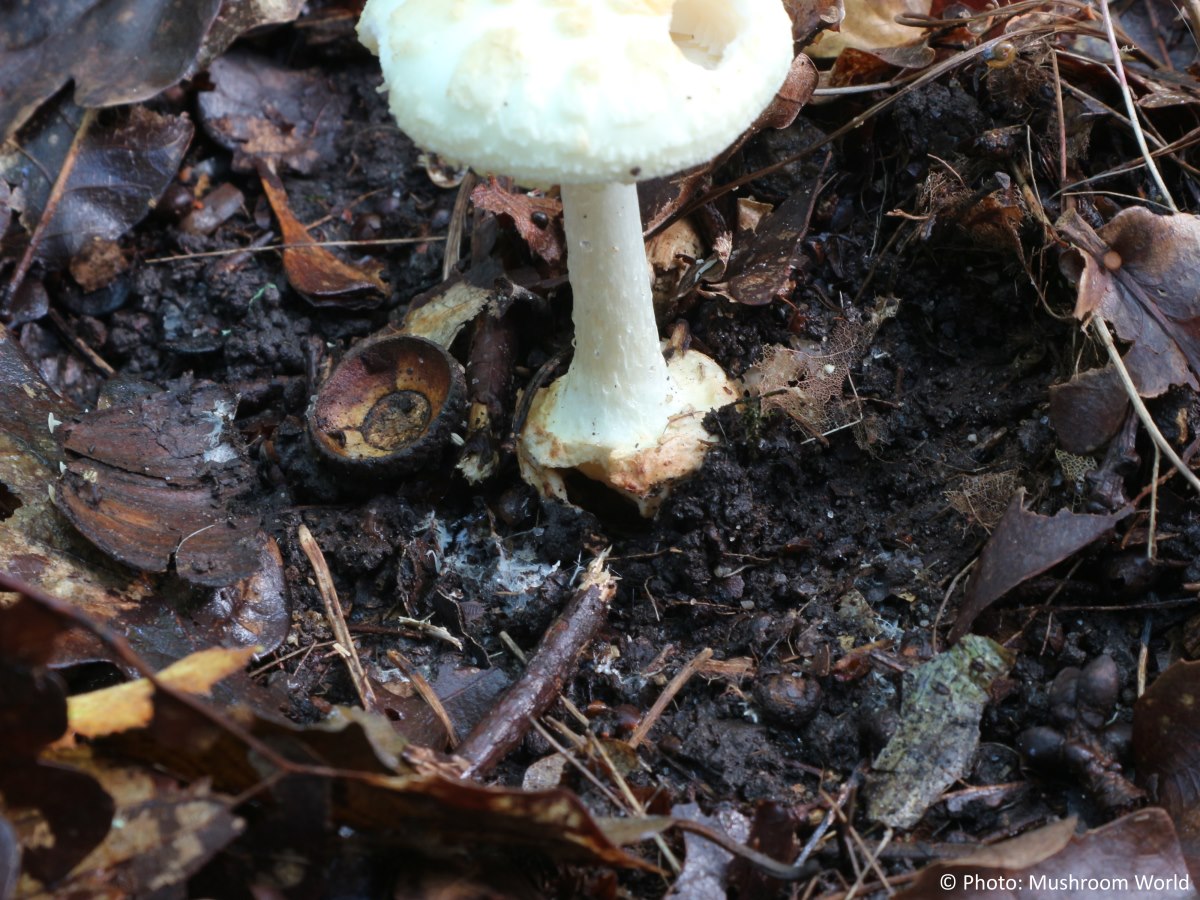
Cap initially convex, becoming broadly convex or nearly flat with age. It is sticky when fresh and usually pale lemon-yellow or greenish yellow, although it may fade rapidly to almost white. The surface is typically covered with scattered whitish, greyish, brownish or occasionally purplish patches or warts, which may disappear as the mushroom matures. The margin is generally unlined when young, but may become very slightly lined in older specimens. The flesh is white and does not change colour when cut. Gills free from the stem, close to crowded, with frequent short-gills. They are white to creamy, sometimes becoming slightly yellowish with age. Stem whitish to pale yellow, more or less equal above an abruptly bulbous base. A fairly persistent, skirt-like white or pale yellow ring is present. The bulbous base is enclosed by a tightly adhering white volva with a distinctive rim or gutter-like ridge around its upper edge. The stem may occasionally develop purplish to brownish discolouration. The mushroom often has a characteristic odour resembling raw potato or radish. Spore print white.
Microscopic Features: The spores are approximately spherical, smooth, and measure 6.5-10 µm. They are amyloid. Basidia are four-spored and lack clamp connections. The pileipellis is an ixocutis composed of hyphae 2-7 µm wide.
Amanita citrina var. citrina on the First Nature Web site.
Amanita citrina f. lavendula on the MushroomExpert.Com Web site.
Many mushrooms are poisonous, and some can be lethally toxic. Distinguishing between edible and poisonous mushrooms can be very challenging. Therefore, we strongly advise against consuming wild mushrooms. This website does not contain any information about the edibility or toxicity of mushrooms.
Although efforts have been made to ensure accuracy on this website, the information may contain errors and omissions. Therefore, all content provided is for educational and informational purposes only and should not be relied upon or used as a basis for consuming any plants or mushrooms.
External links are provided for reference only. We do not endorse or take responsibility for the content, advice, or products found on these sites or in any advertisements shown on this website.