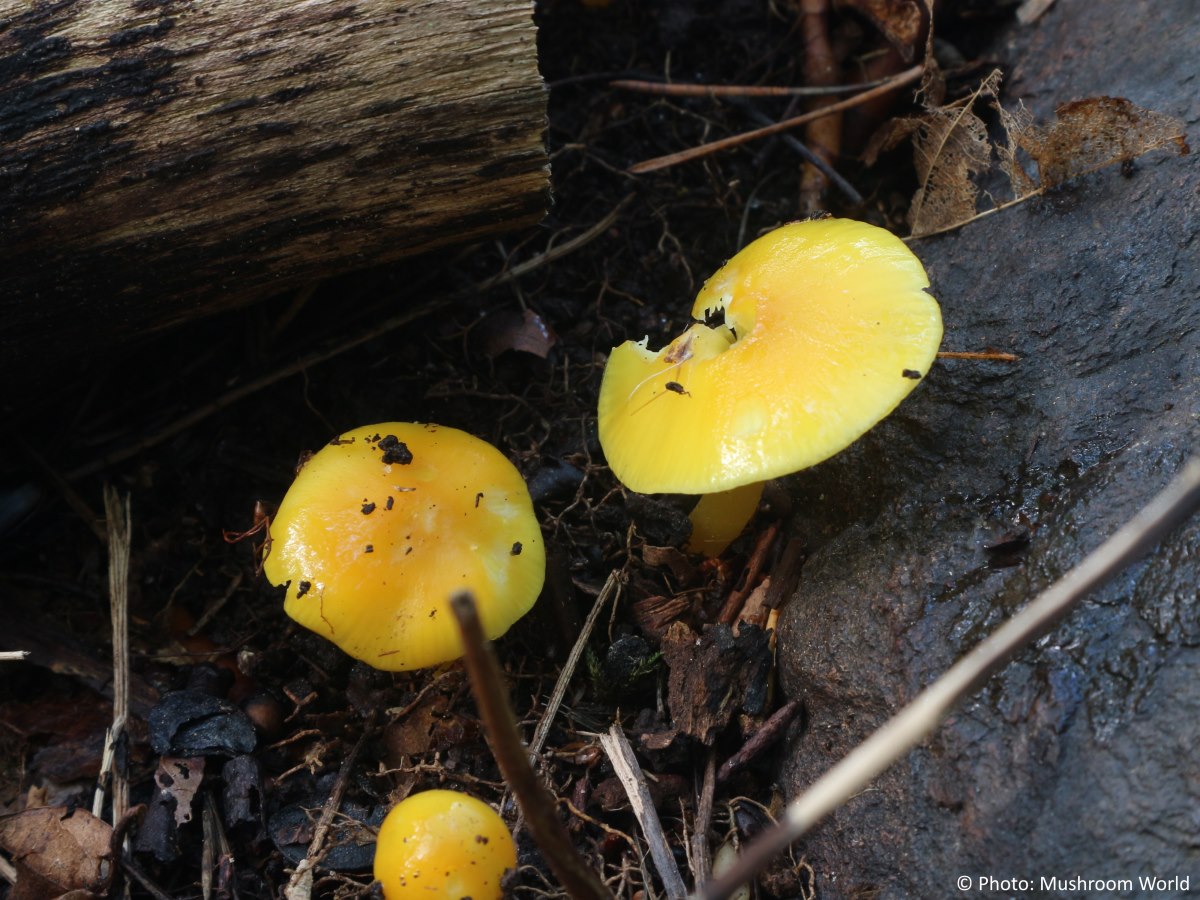
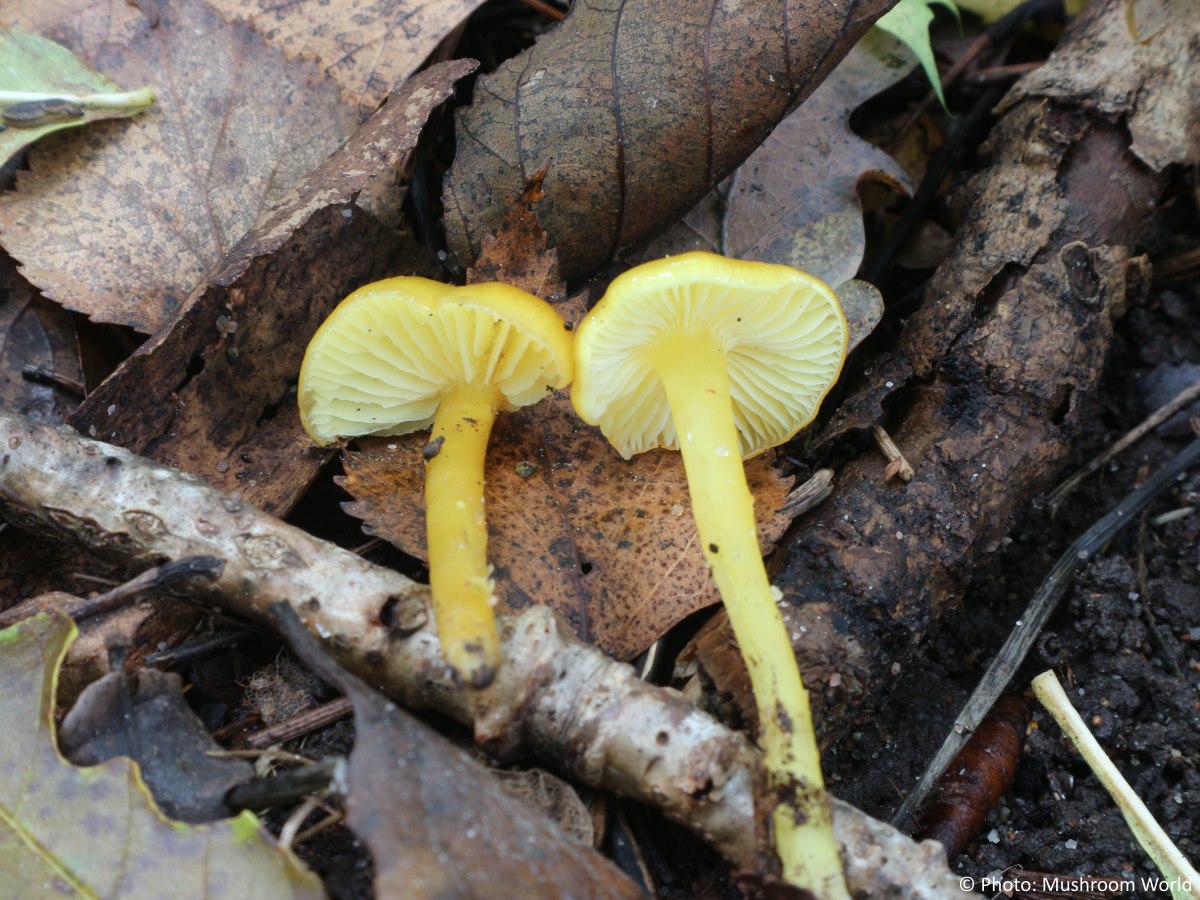
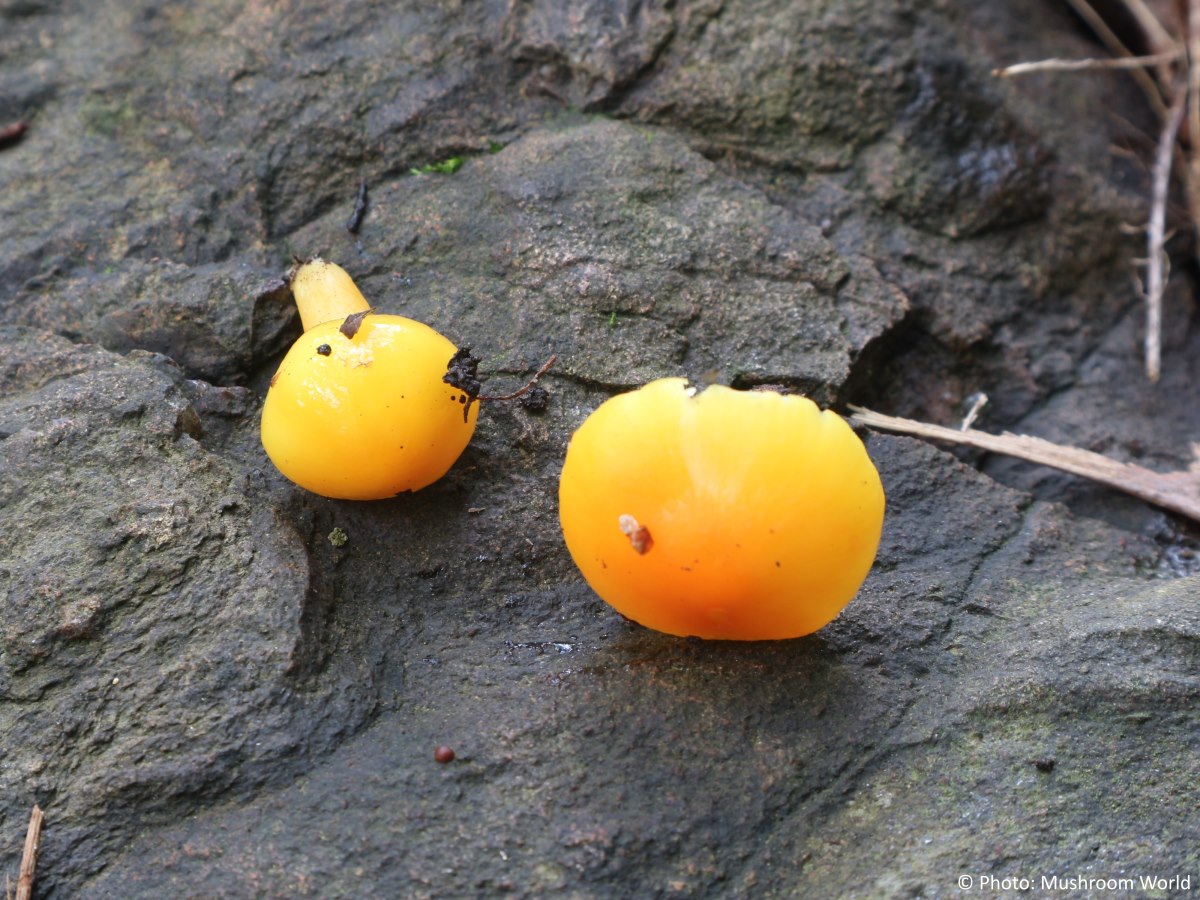
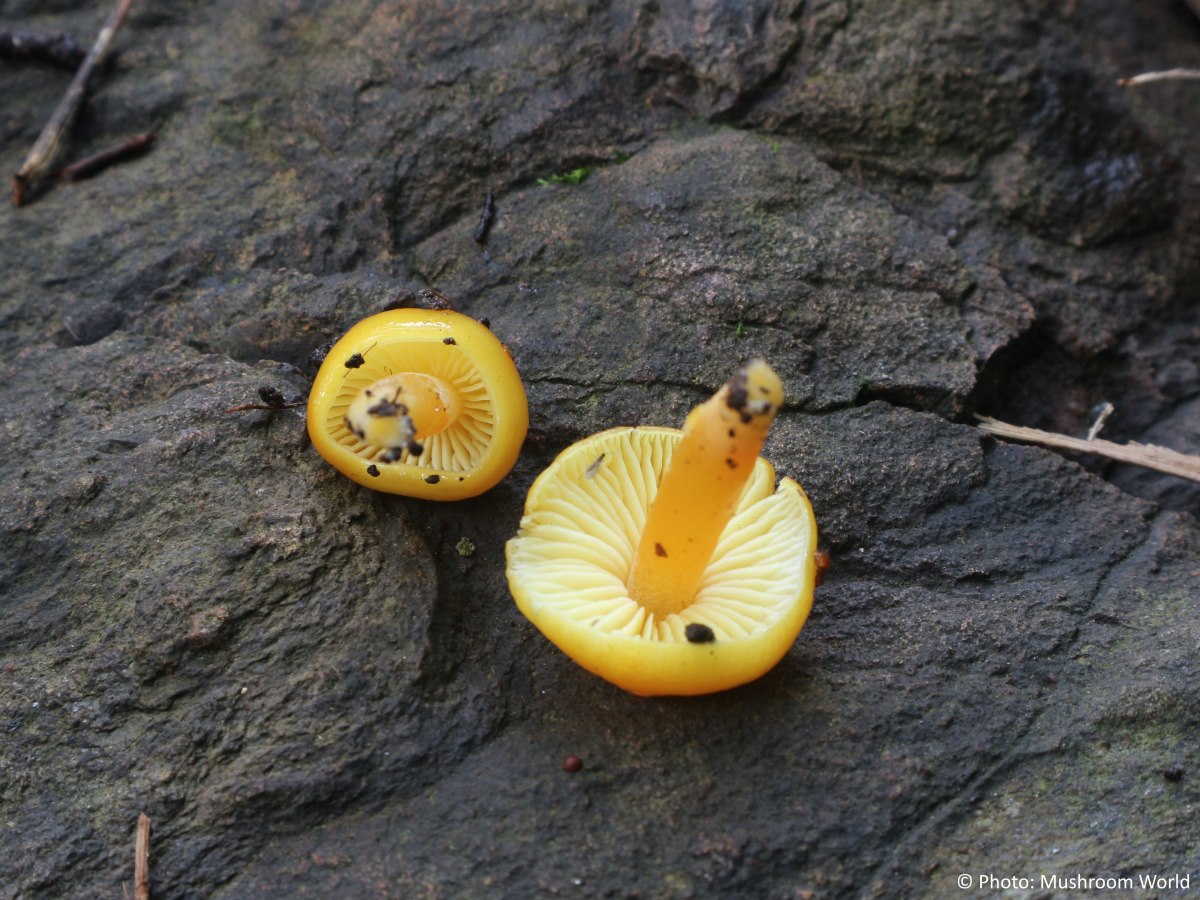
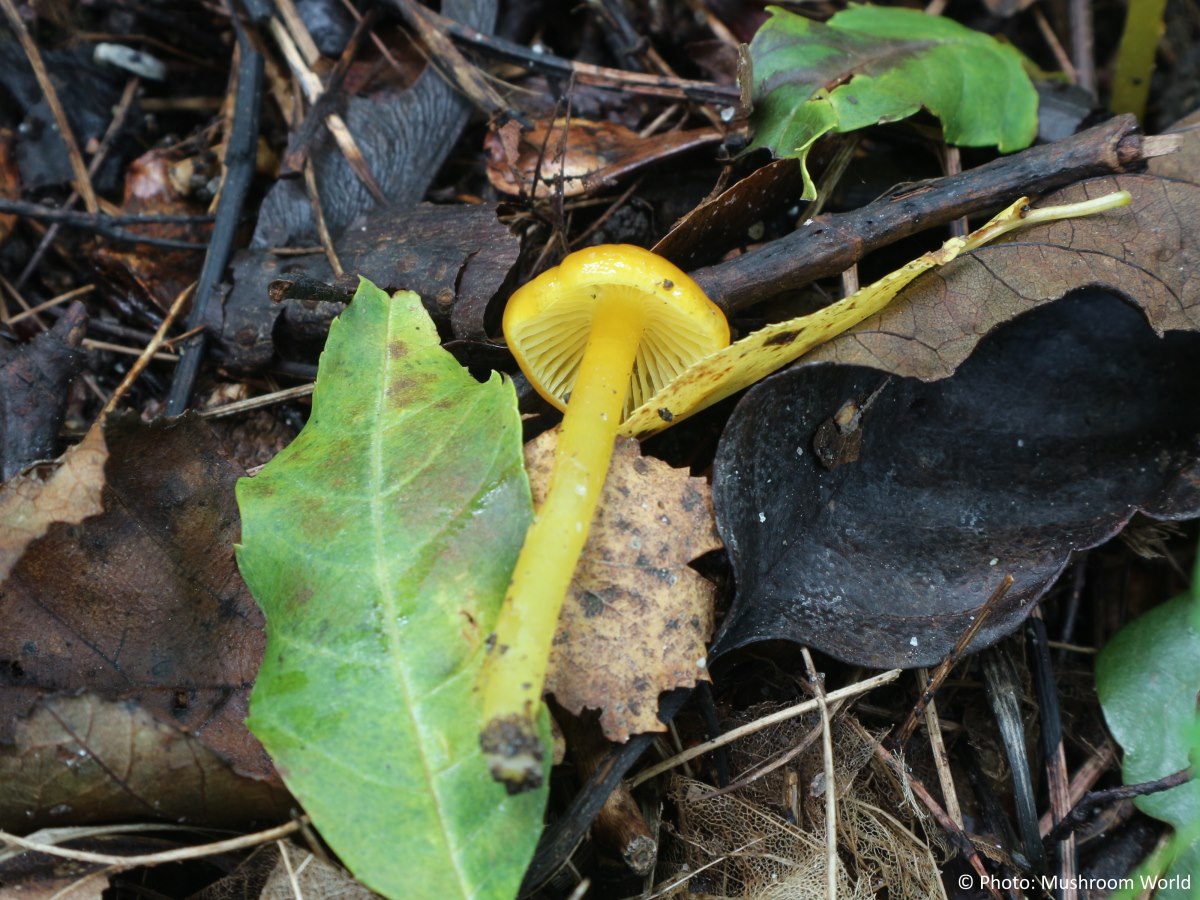
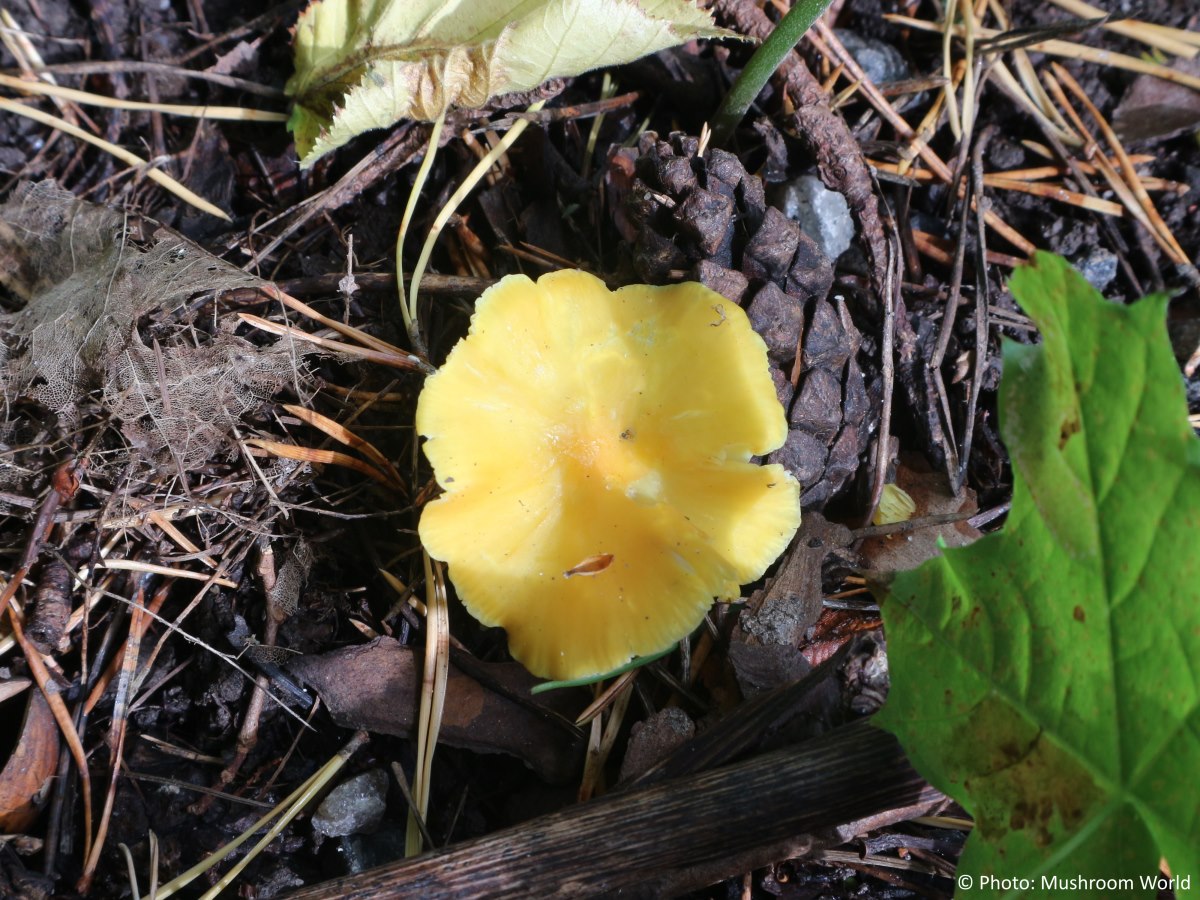
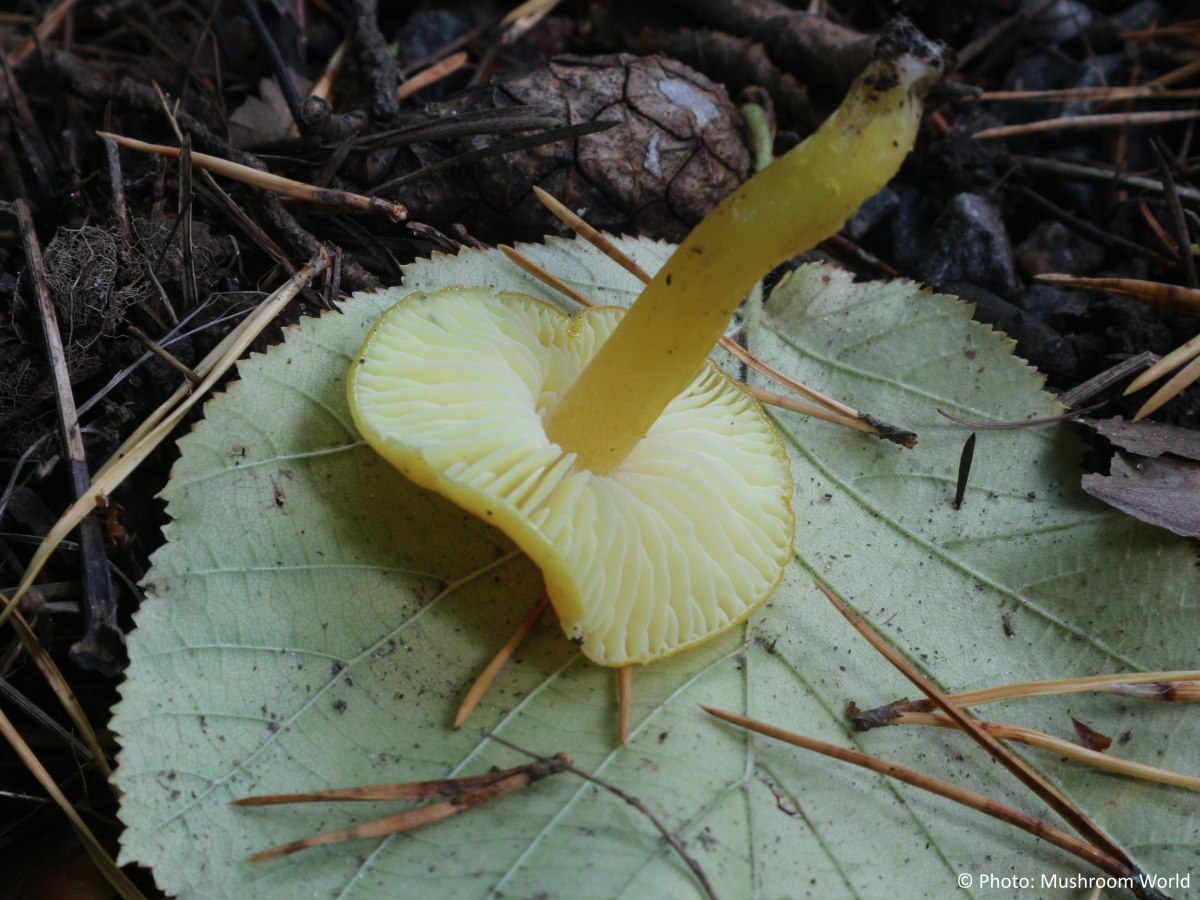
Cap smooth and distinctly viscid or slimy in damp weather, initially convex or domed and later becoming broadly umbonate, flattened or nearly flat. It is bright lemon-yellow to golden yellow, sometimes with orange tones and occasionally reddish towards the centre. The cap flesh is thin and yellow. Gills waxy, broad and fairly distant, yellow at first and becoming paler lemon-yellow with age. They are adnate to narrowly attached to the stem. Stem smooth, slender and cylindrical, sometimes slightly compressed or grooved, and coloured similarly to the cap. It is moist to viscid when damp and has no ring. Spore print white.
Microscopic Features: The spores are ellipsoidal, sometimes slightly constricted or with one side concave, measuring about 7-9 x 4-5.5μm. They are smooth and inamyloid. The gill trama is regular, with long narrow elements, and the pileipellis forms an ixotrichoderm with gelatinised outer hyphae.
Hygrocybe chlorophana on the www.first-nature.com web site.
Hygrocybe flavescens on the MushroomExpert.Com web site.
Many mushrooms are poisonous, and some can be lethally toxic. Distinguishing between edible and poisonous mushrooms can be very challenging. Therefore, we strongly advise against consuming wild mushrooms. This website does not contain any information about the edibility or toxicity of mushrooms.
Although efforts have been made to ensure accuracy on this website, the information may contain errors and omissions. Therefore, all content provided is for educational and informational purposes only and should not be relied upon or used as a basis for consuming any plants or mushrooms.
External links are provided for reference only. We do not endorse or take responsibility for the content, advice, or products found on these sites or in any advertisements shown on this website.