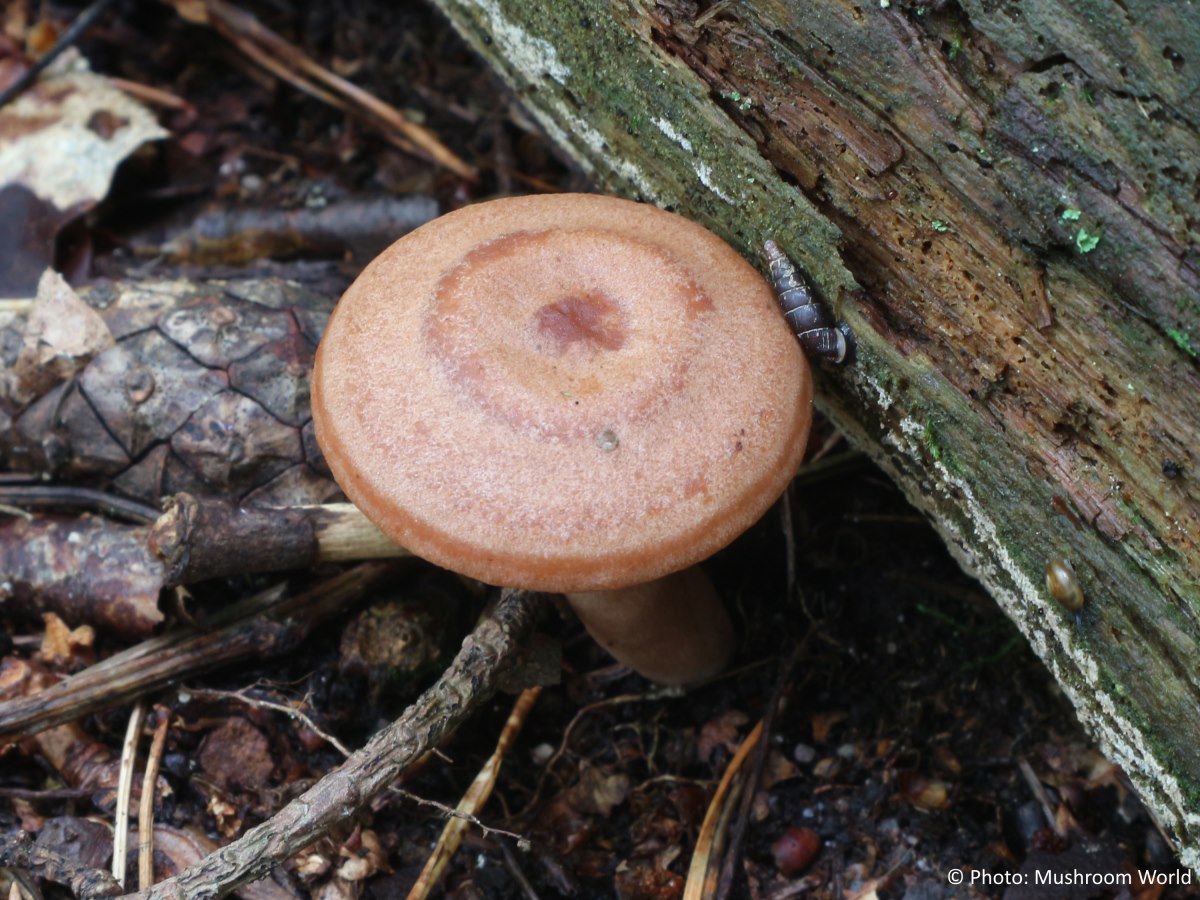
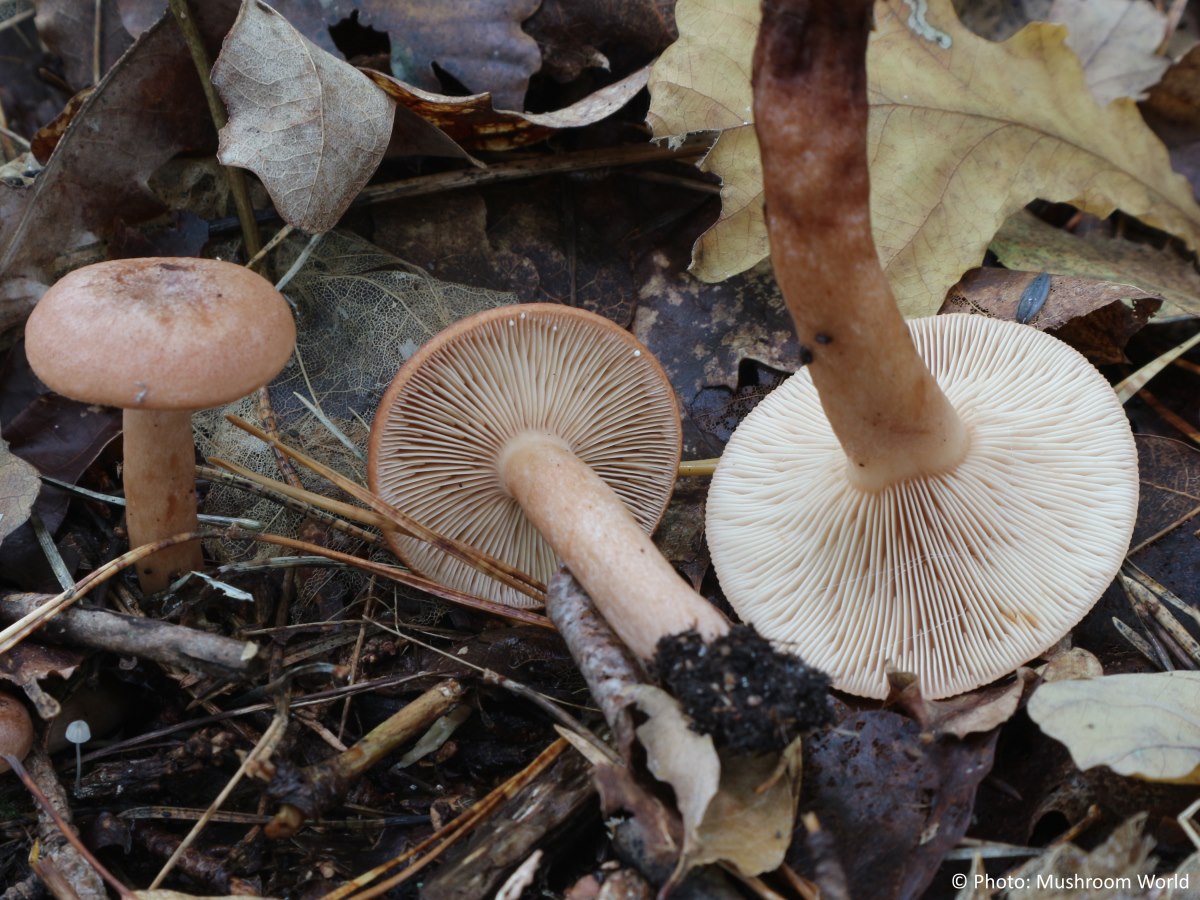
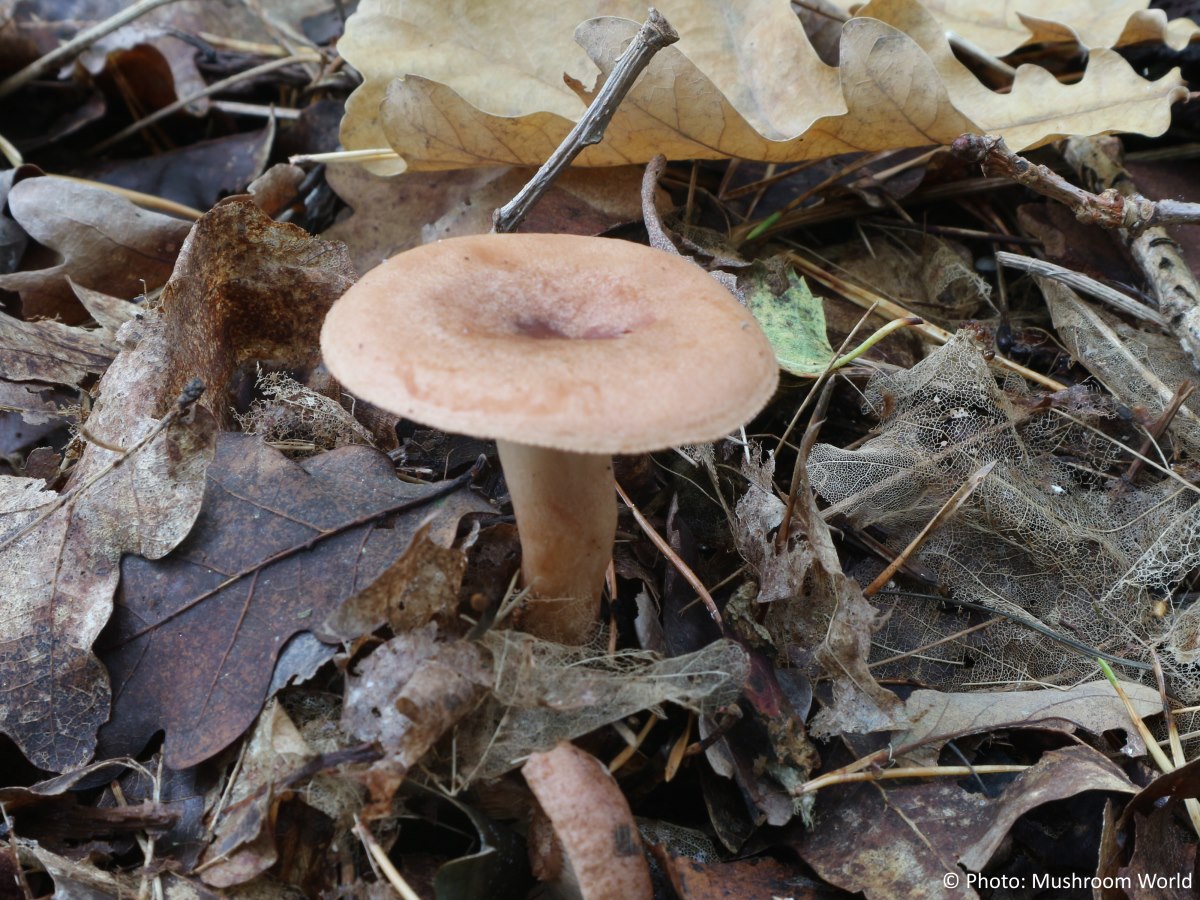
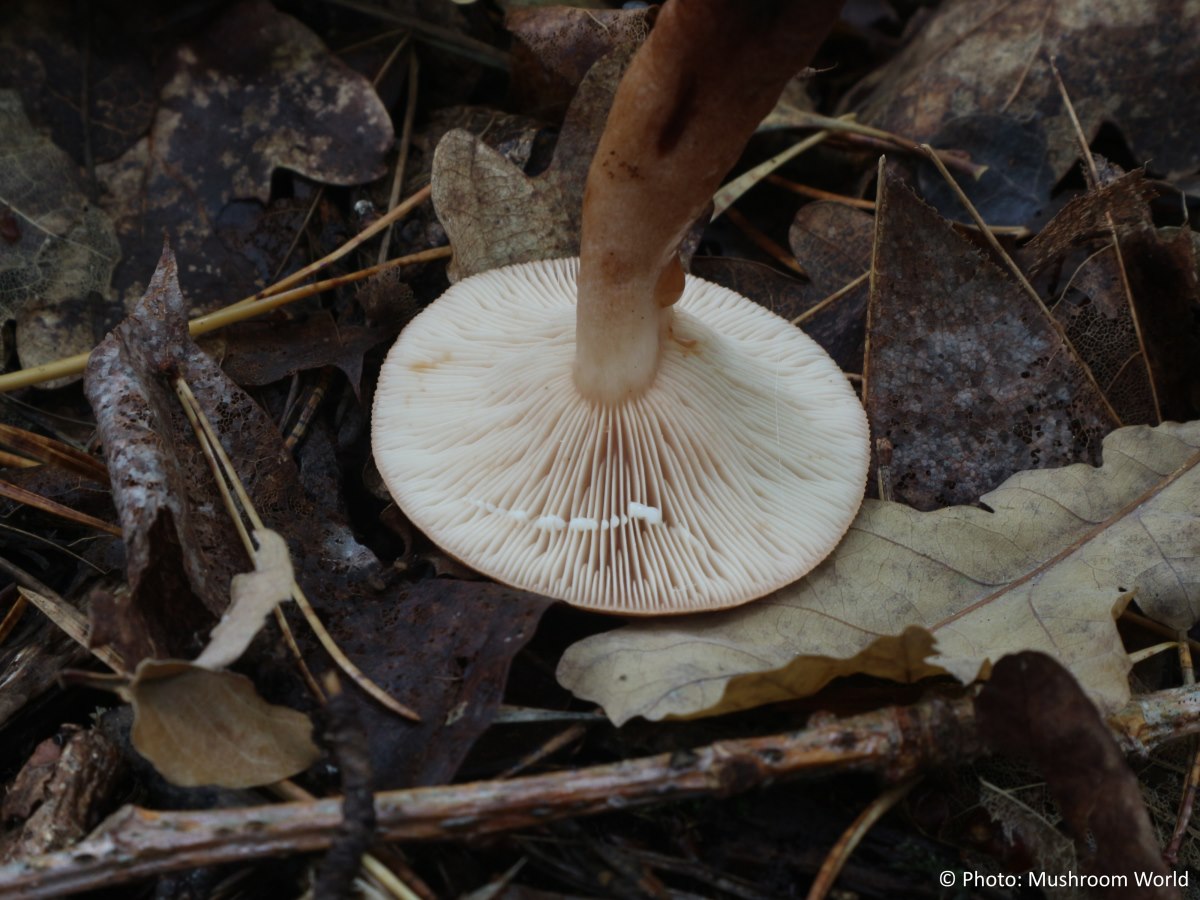
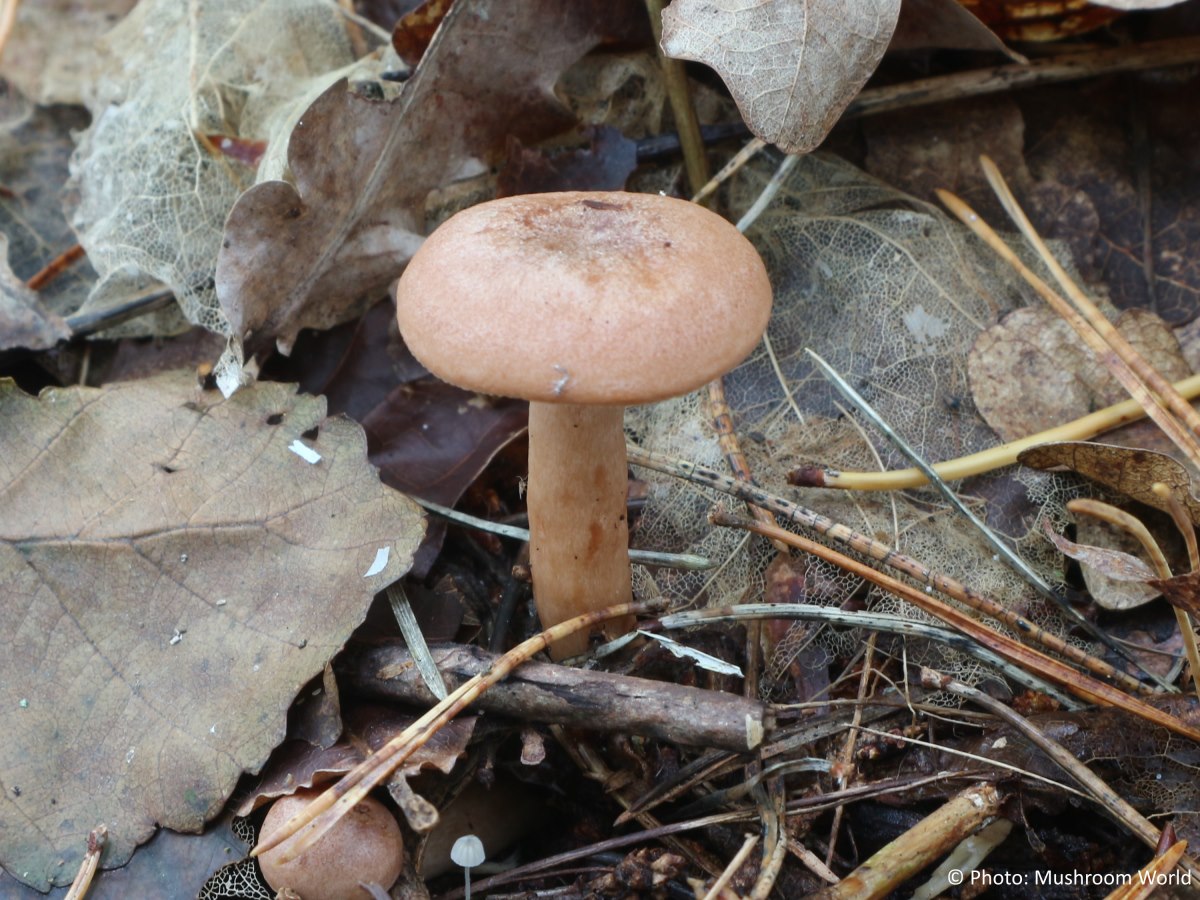
Cap smooth, shiny when wet and drying to a dull matt finish, initially convex and later becoming flattened or slightly depressed. It is yellow-brown to reddish-brown and usually shows faint darker concentric zones. Gills creamy-brown to pinkish-yellow, crowded and shortly decurrent. When damaged they release creamy-white milk that does not change colour. The gills become noticeably browner with age. Stem smooth, cylindrical and similar in colour to the cap, often becoming slightly darker towards the base. The stem has no ring. Spore print pale creamy-white with a slight salmon-pink tinge.
Microscopic Features: The spores are broadly ellipsoidal, measuring 8-9 x 7-7.5μm. They are amyloid and ornamented with low warts, some of which are joined by ridges and occasional cross-connections, forming a partial but incomplete network.
Lactarius quietus on the www.first-nature.com web site.
Lactarius quietus var. incanus on the MushroomExpert.Com web site.
Many mushrooms are poisonous, and some can be lethally toxic. Distinguishing between edible and poisonous mushrooms can be very challenging. Therefore, we strongly advise against consuming wild mushrooms. This website does not contain any information about the edibility or toxicity of mushrooms.
Although efforts have been made to ensure accuracy on this website, the information may contain errors and omissions. Therefore, all content provided is for educational and informational purposes only and should not be relied upon or used as a basis for consuming any plants or mushrooms.
External links are provided for reference only. We do not endorse or take responsibility for the content, advice, or products found on these sites or in any advertisements shown on this website.