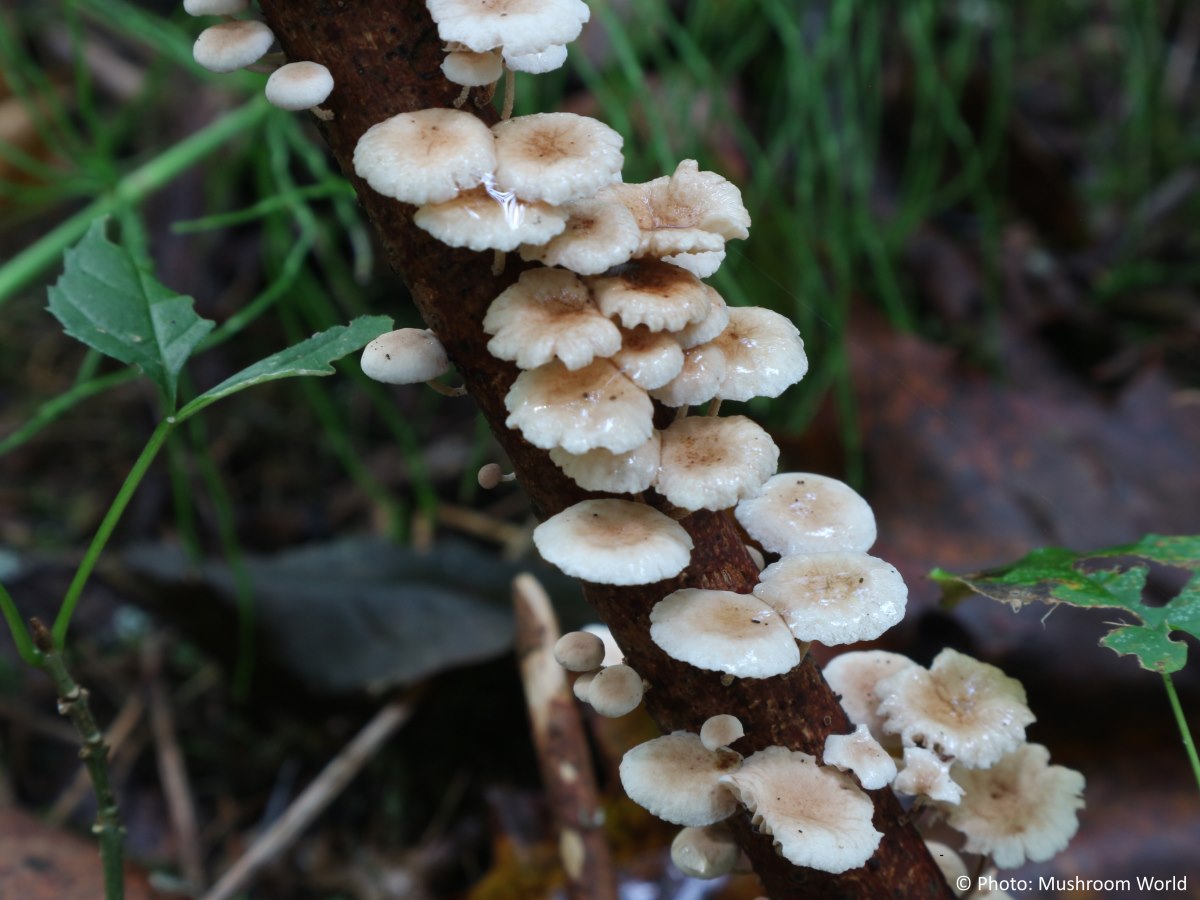
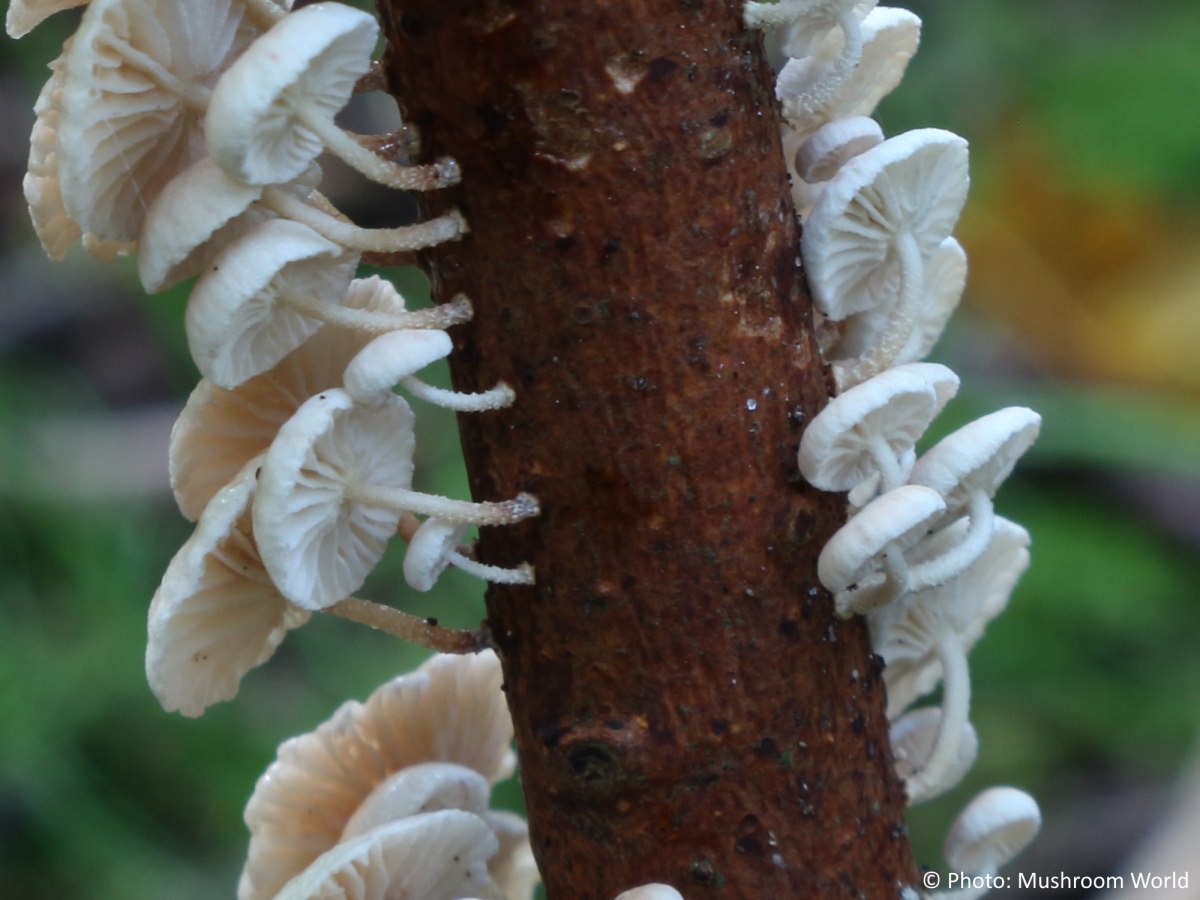
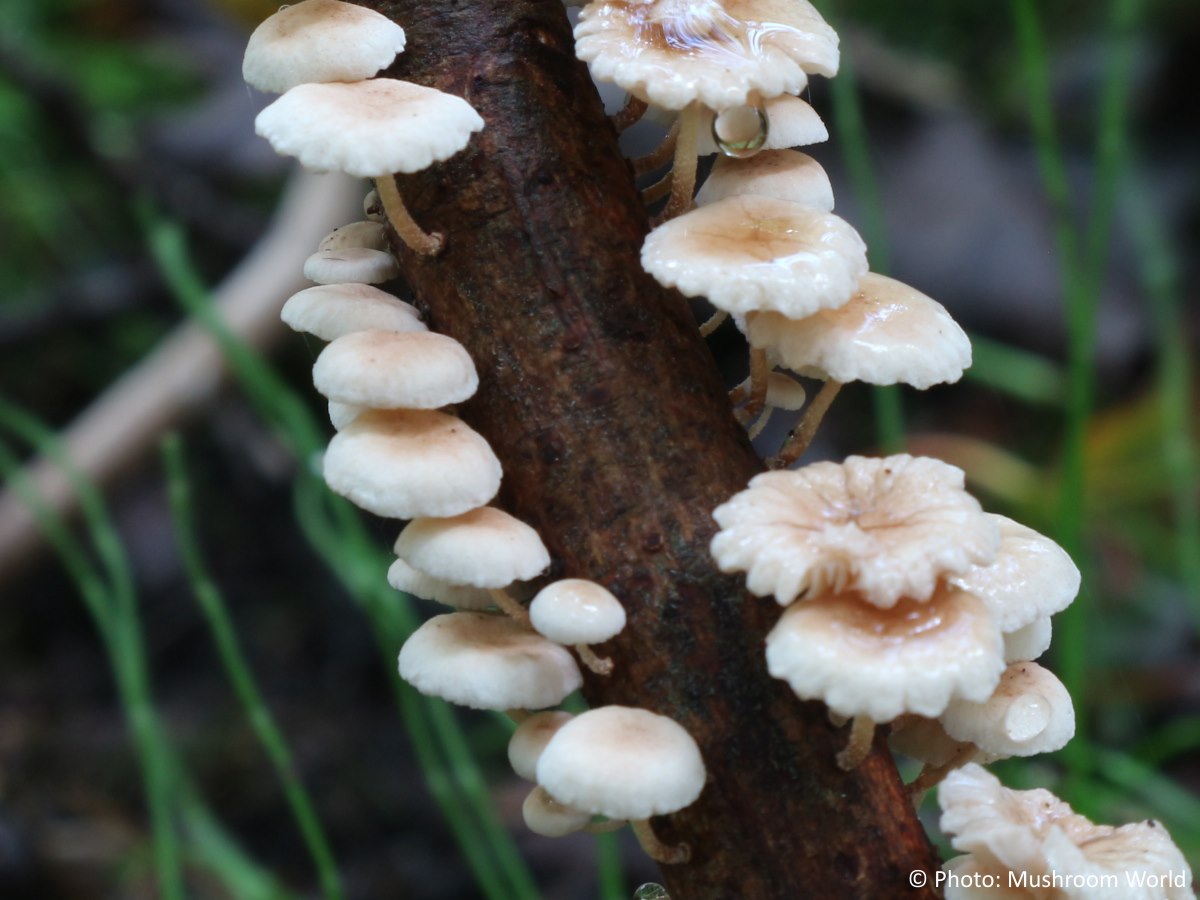
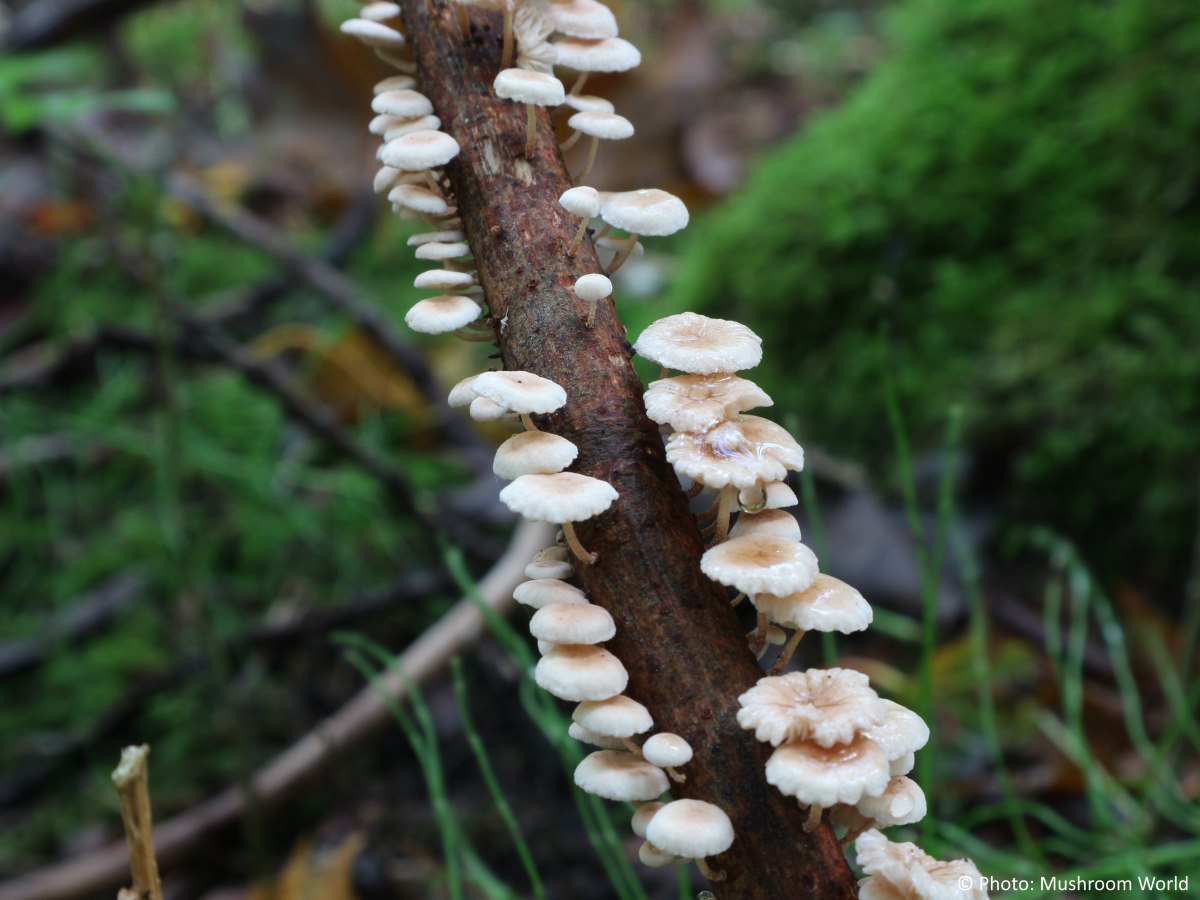
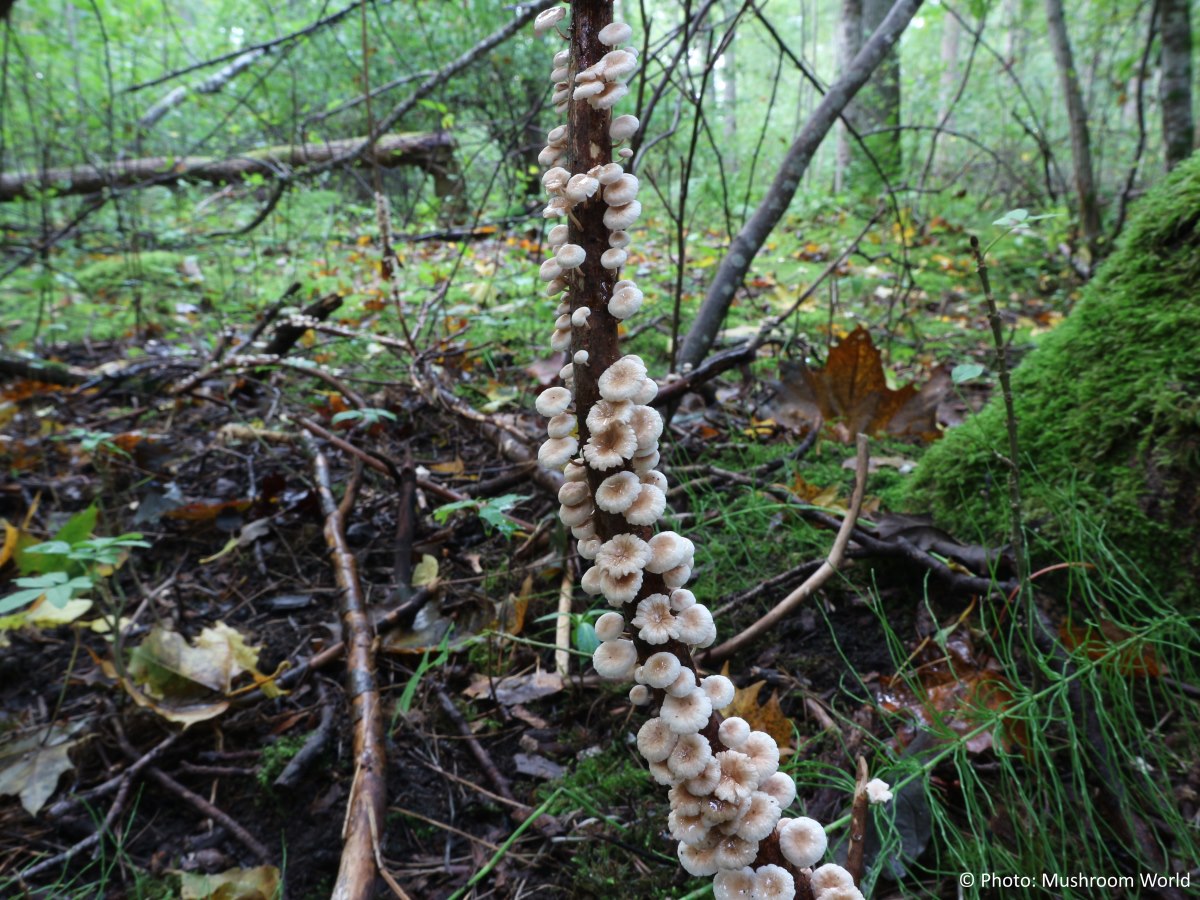
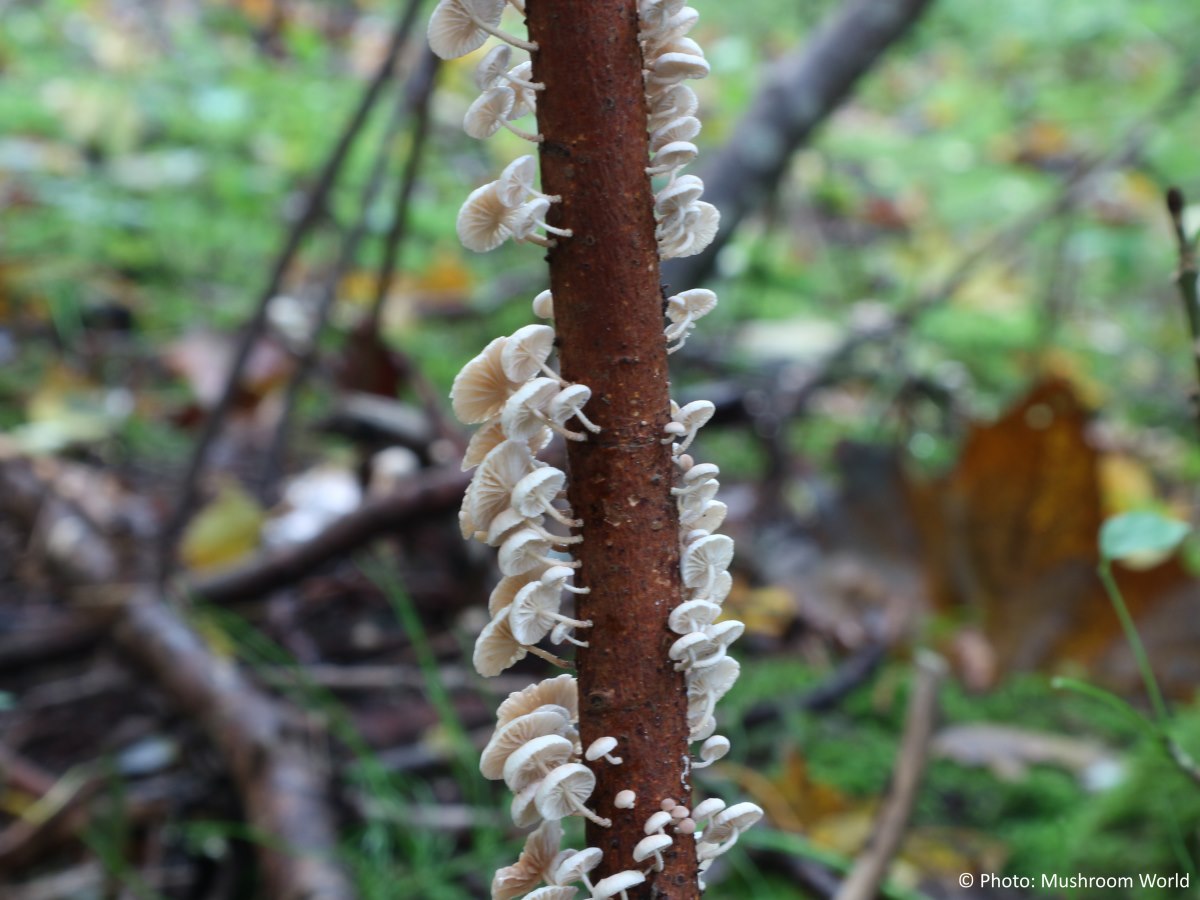
Cap white to pale cream, initially convex and becoming flatter with age. The surface is smooth to finely textured, while the margin often develops conspicuous radial wrinkles or grooves as the cap expands. Gills pinkish-white when young, becoming ochre or yellowish-brown with age. They are narrow, widely spaced and adnate, attaching directly to the stem. Stem slender and delicate, whitish or pale cream near the apex and gradually becoming darker brown towards the base. Its surface may appear slightly scurfy or finely roughened. There is no ring. Flesh is very thin and pale, with no distinctive smell or taste.
Habitat saprotrophic on dead woody material, particularly small twigs and branches of deciduous broadleaf trees and conifers. It is also frequently found on dead bramble stems. Because it often fruits on attached dead twigs, specimens may sometimes occur well above ground level.
Spore print white.
Microscopic features spores cylindrical to bean-shaped, smooth, 7.5–11 × 2.5–4 µm and inamyloid.
Marasmiellus ramealis on the www.first-nature.com web site.
Many mushrooms are poisonous, and some can be lethally toxic. Distinguishing between edible and poisonous mushrooms can be very challenging. Therefore, we strongly advise against consuming wild mushrooms. This website does not contain any information about the edibility or toxicity of mushrooms.
Although efforts have been made to ensure accuracy on this website, the information may contain errors and omissions. Therefore, all content provided is for educational and informational purposes only and should not be relied upon or used as a basis for consuming any plants or mushrooms.
External links are provided for reference only. We do not endorse or take responsibility for the content, advice, or products found on these sites or in any advertisements shown on this website.