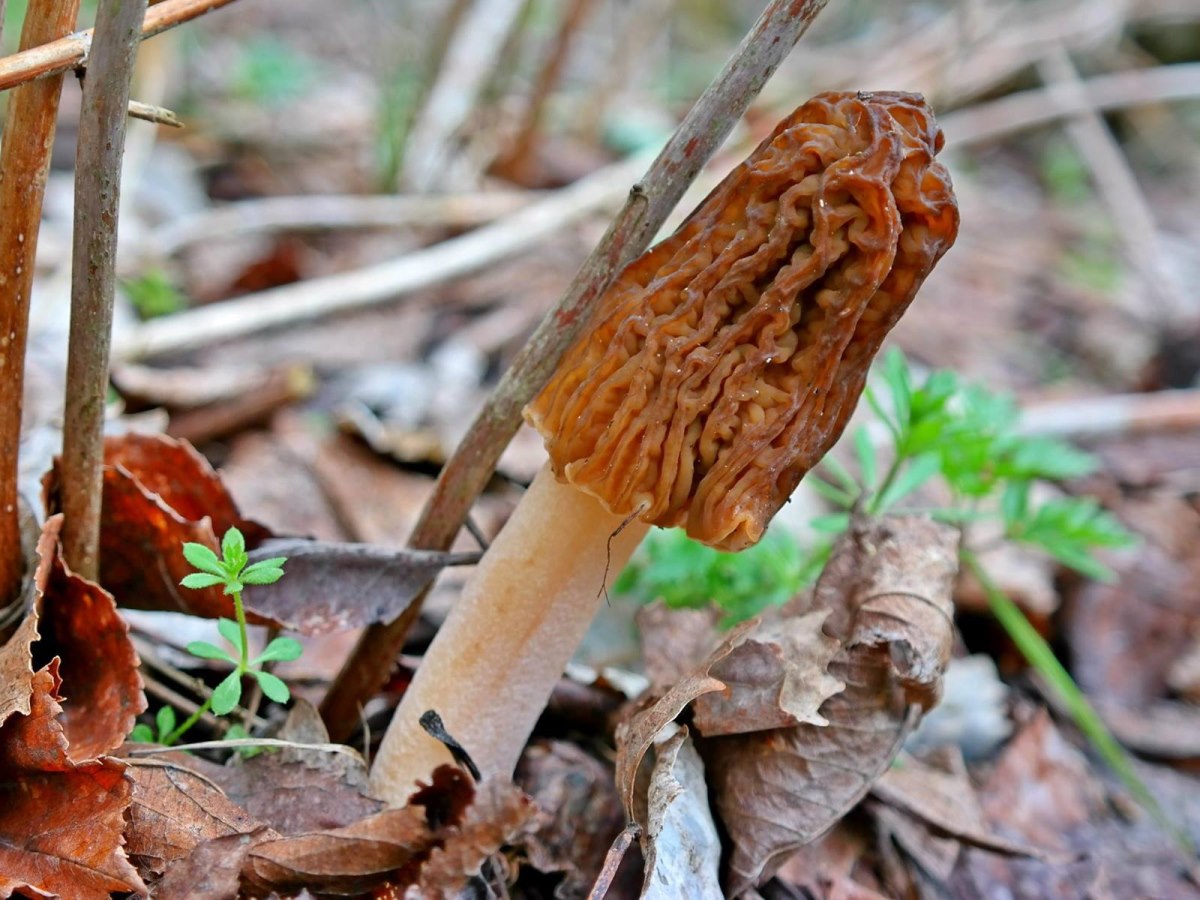
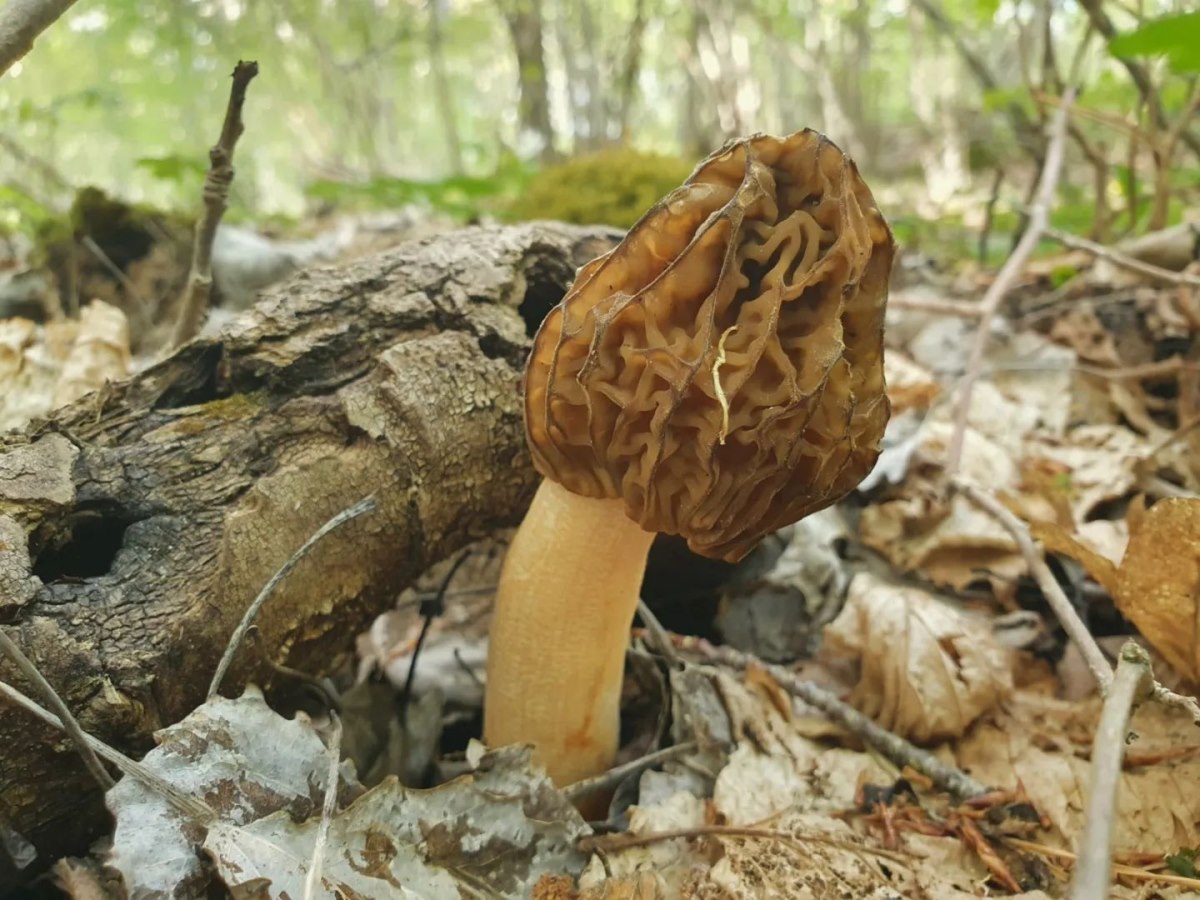
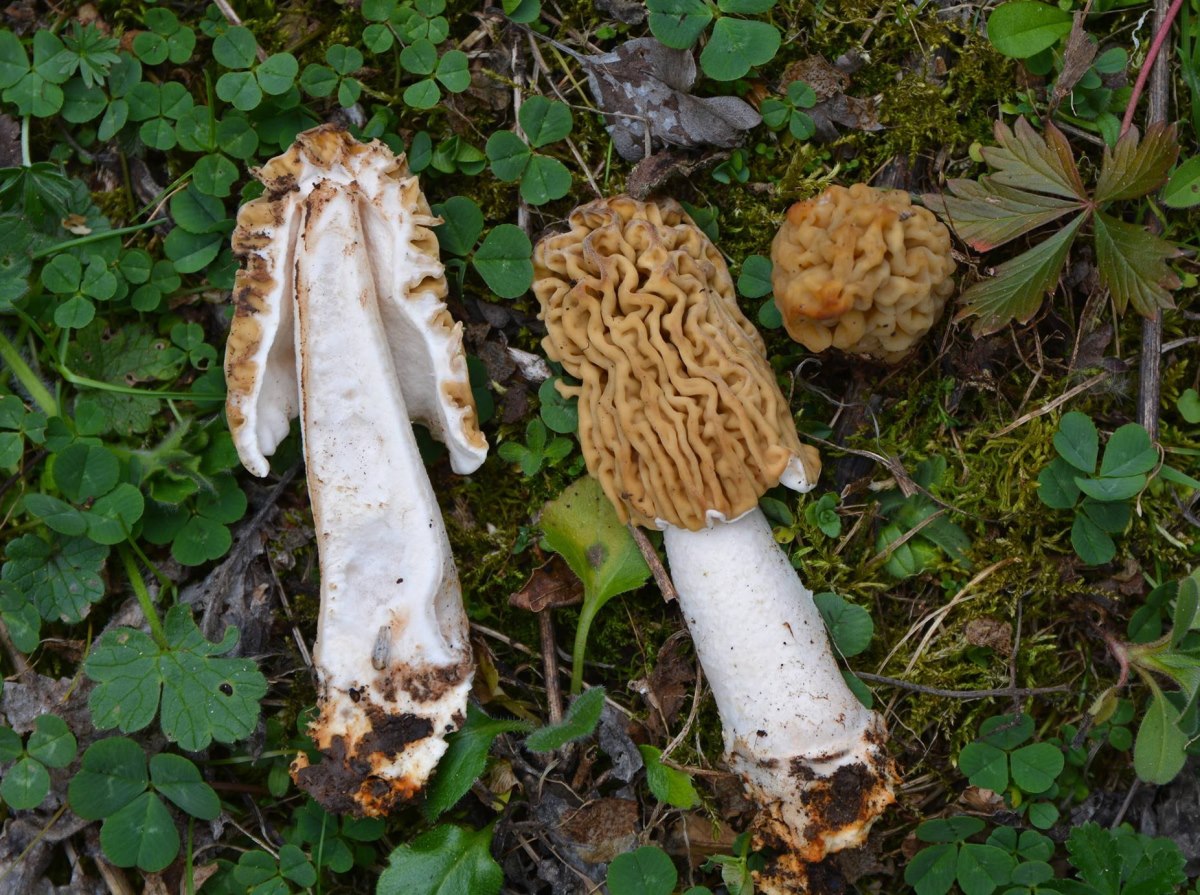
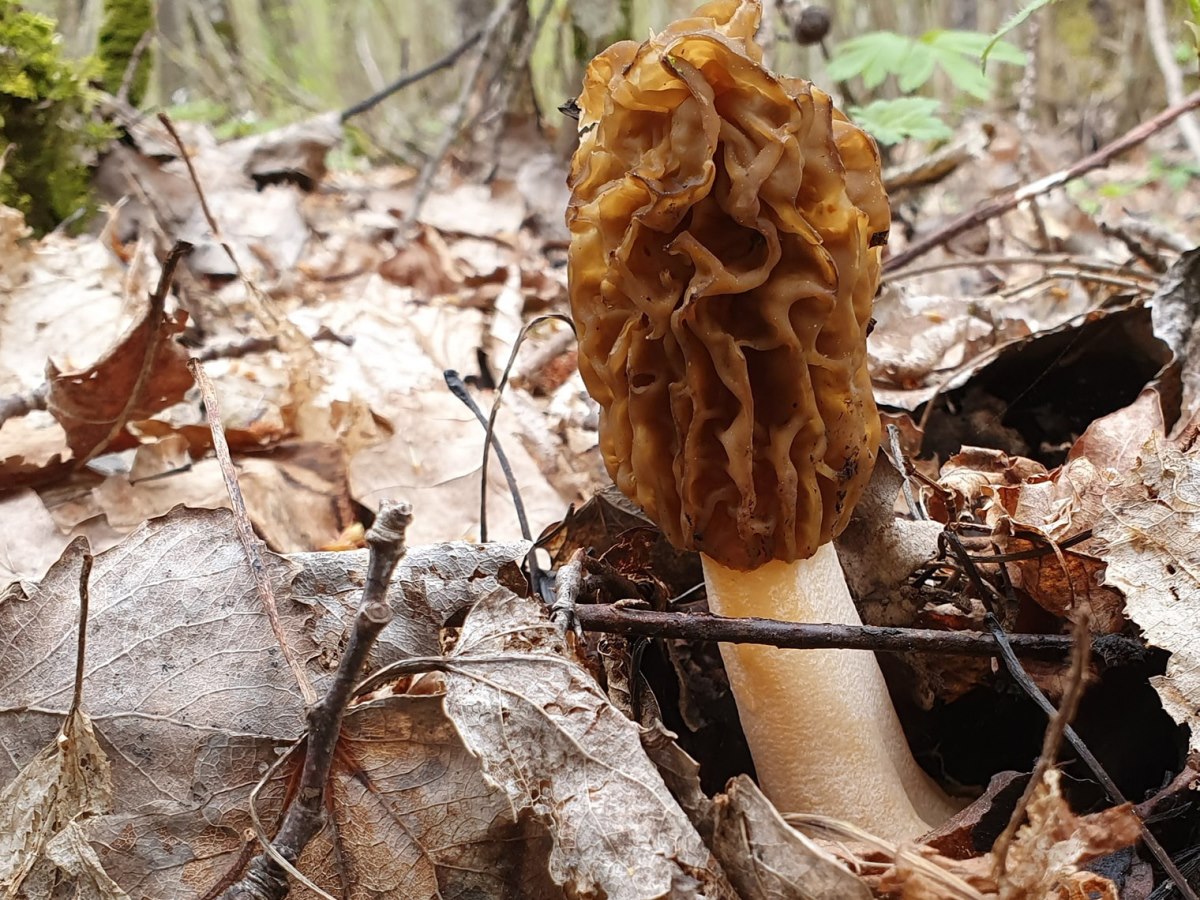
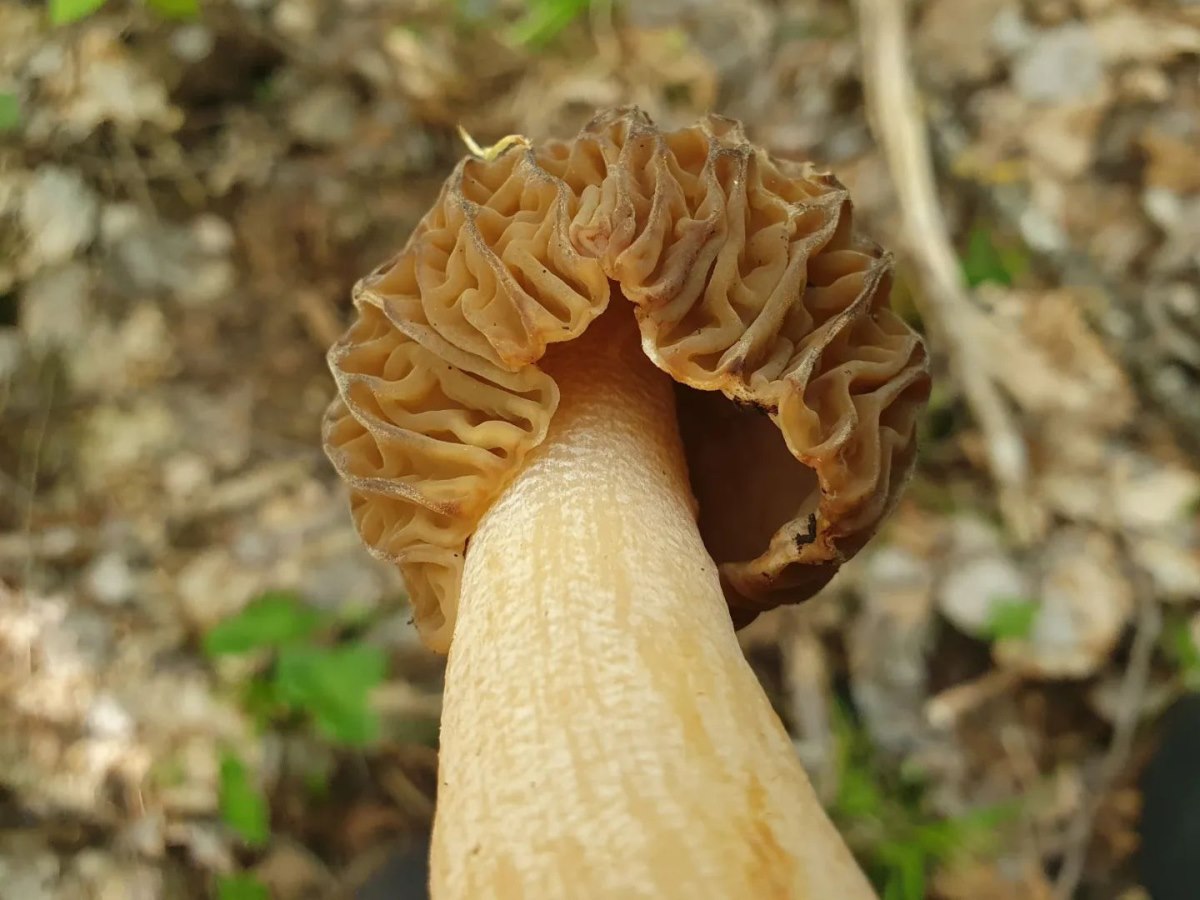
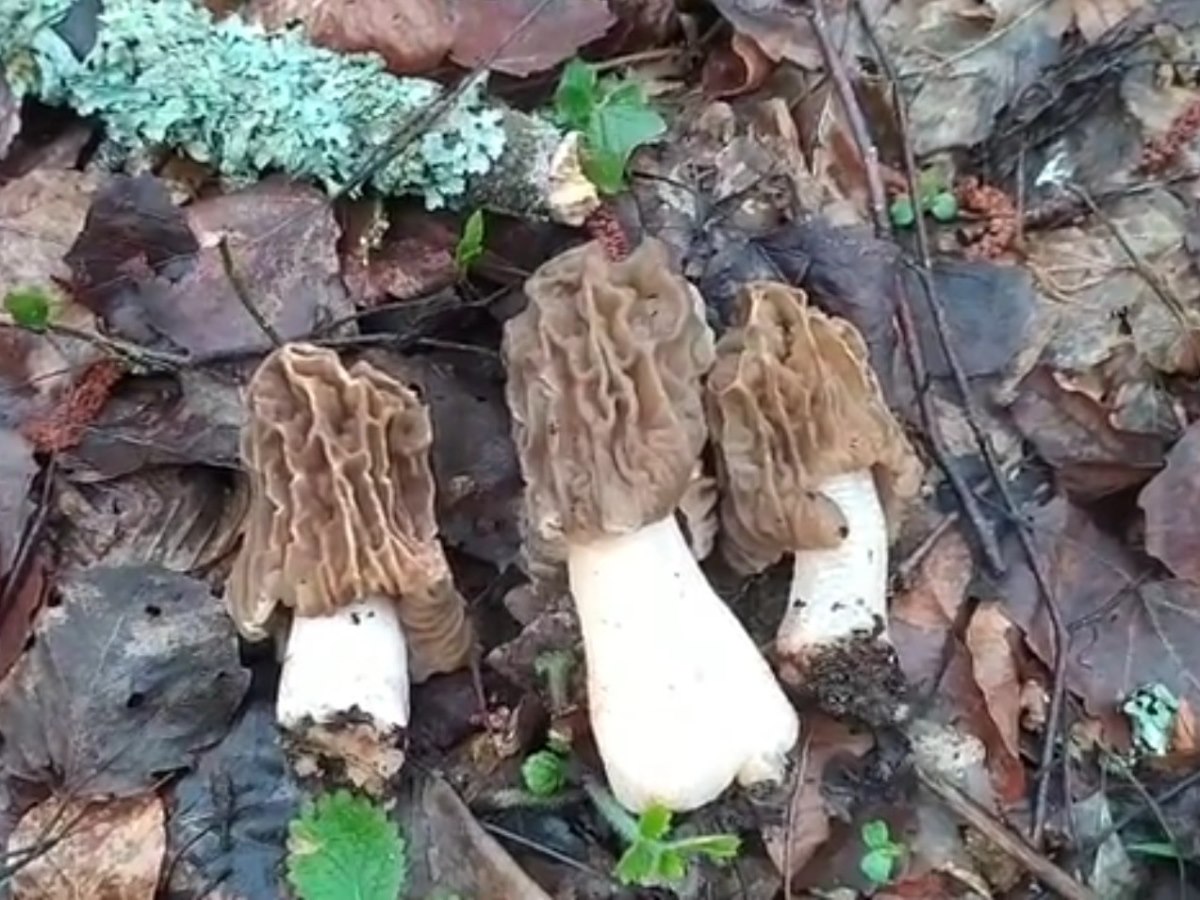
Cap tan, yellow-brown, or brown, usually bell-shaped, conical, or somewhat irregular, with prominent longitudinal wrinkles and folds rather than the deep pits and ridges of true morels. The underside is paler, often whitish. The cap hangs completely free around the stem except where it is attached at the very top. The flesh is thin and fragile. Stem creamy white to pale yellow, long and usually more or less equal, sometimes slightly enlarged at the base. It is often finely granular or scurfy, sometimes with faint concentric bands. The interior is hollow or loosely filled with whitish, cottony fibres. Spore print cream to pale yellowish.
Microscopic Features: Spores are ellipsoid to elongated-ellipsoid, smooth, measuring 48–85 x 15–24 µm, and hyaline. The asci are typically 2-spored, which is a useful microscopic character for this species.
Note: Verpa bohemica has also been placed in the genus Ptychoverpa, and the name Ptychoverpa bohemica is still encountered as a synonym. Although it is closely related to the true morels, it is not a true morel. Older specimens can sometimes look deceptively pitted, which is one reason it is frequently misidentified in the field.
Verpa bohemica on the MushroomExpert.Com web site.
Many mushrooms are poisonous, and some can be lethally toxic. Distinguishing between edible and poisonous mushrooms can be very challenging. Therefore, we strongly advise against consuming wild mushrooms. This website does not contain any information about the edibility or toxicity of mushrooms.
Although efforts have been made to ensure accuracy on this website, the information may contain errors and omissions. Therefore, all content provided is for educational and informational purposes only and should not be relied upon or used as a basis for consuming any plants or mushrooms.
External links are provided for reference only. We do not endorse or take responsibility for the content, advice, or products found on these sites or in any advertisements shown on this website.